

What Is a Rate Confirmation? A Complete Guide for Dispatchers
If you're new to dispatching, there's one piece of paperwork that matters more than almost anything else: the rate con. Skip it, or let a load move without one, and you're exposed — to a broker changing the rate after the fact, to a payment that never comes through, to a dispute you have no way to win. Get in the habit of handling it right, and it quietly becomes the thing that protects you when something inevitably goes wrong.
Here's what it actually is, what needs to be in it, and what to do when one doesn't show up.
What it is
Once a load is booked, the broker sends over a written agreement locking in the terms before the truck moves. That's the rate confirmation. It usually spells out pickup and delivery locations and dates, the agreed rate, load details like weight and equipment type, contact info for both sides, payment terms, and anything unusual — detention rules, check-call requirements, special handling instructions.
A lot of this industry still runs on phone calls, and a verbal agreement can feel like enough in the moment. It isn't. If the rate gets disputed later, or the broker claims something different was agreed, a phone call proves nothing. A signed document does.
Why it carries so much weight
Brokers occasionally try to knock the rate down after a truck is already rolling — more common on longer hauls, or when the market shifts mid-week. It's harder to pull that off once there's a signed rate con on file.
It also tends to gate payment entirely. Most brokers won't touch an invoice without a matching rate confirmation attached, even if the load delivered without a hitch. And anything that got mentioned on the phone but didn't make it into the actual document — detention terms, an agreed accessorial — generally doesn't count for much when it's time to get paid.
Here's a scenario that plays out more often than it should: a dispatcher books a load at $2,400, verbally, on a Friday afternoon. The broker's office is slow getting the paperwork out, and the truck picks up Monday morning without it. By Tuesday, the rate con finally shows up — for $2,150. The broker claims that's what was agreed. Without anything in writing from the original call, there's nothing to point to except one word against another. That $250 is gone, and there's no real way to get it back after the fact.
Freight broker vs. carrier rate confirmation
You'll hear this phrased a couple of different ways depending on who's talking. A freight broker rate confirmation is the standard version — issued by the broker, sent to the carrier or dispatcher. When someone says carrier rate confirmation, they usually mean the same document, just from the other side of the transaction. It's not a different form; it's the same paperwork, described from whichever seat you're sitting in.
That distinction matters more than it sounds like it should, mostly because of who's expected to keep track of it. On the carrier side, a carrier rate confirmation is what you file, reference during the load, and pull up again if a payment dispute comes up weeks later. On the broker side, the freight broker rate confirmation they issued is their own record of what they agreed to — which is exactly why it's worth confirming both copies actually match before the truck leaves the yard.
When to actually file it
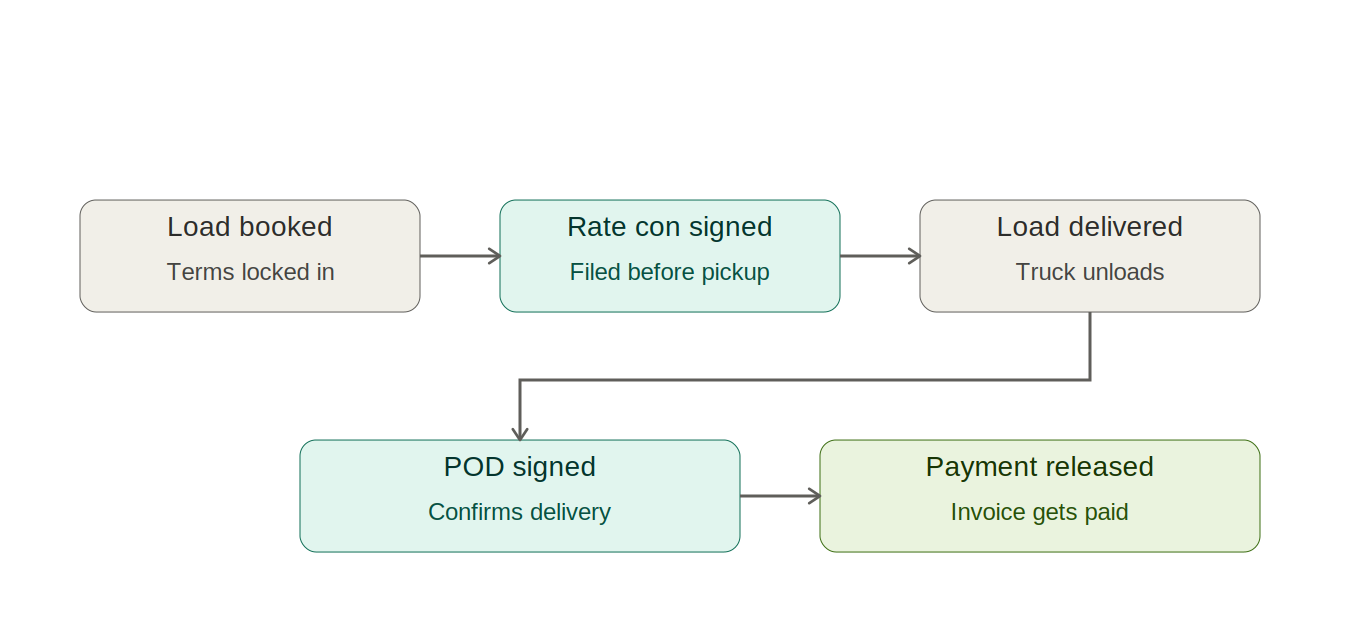
The moment the load is booked — not once the truck's already en route, not "later today." If a broker is pushing to get moving on a verbal rate while the paperwork is "on its way," treat that as a warning sign, not a normal Tuesday. Dispatching without it on file is how disputes turn into unpaid invoices.
When one goes missing
It happens more than it should — a broker forgets to send it, or it gets buried in an email chain somewhere. A few things worth doing when that's the situation:
Follow up right away, before the truck moves, rather than after. Don't let a load roll on a verbal rate while you wait for the document to catch up. If there's a real delay, get something in writing even informally — a text or email confirming the rate and load details beats nothing. And when the rate con finally does show up, actually read it before signing. Brokers sometimes send over terms that don't quite match what was discussed on the phone, and catching that before you sign is a lot easier than catching it after.
Detention and accessorials — the part people forget to check
Rate confirmations don't just cover the linehaul rate. They're also where detention pay, layover fees, and other accessorial charges are supposed to get spelled out — and this is the section people skim past most often, right before it turns into a problem.
If a load ends up sitting at a shipper for four hours past the scheduled window, whether you get paid for that time depends entirely on what the rate con actually says, not on what's "typically" fair or what the broker verbally mentioned. Some brokers write in a flat detention rate after a set grace period (say, $50/hour after two hours free). Others leave it out entirely, which usually means you're negotiating it after the fact, from a much weaker position than if it had been agreed upfront.
The habit worth building: before signing anything, actually read the detention and accessorial language, not just the rate and pickup/delivery info at the top. It's a two-minute check that saves a much longer argument later.
How it differs from a proof of delivery
These two get mixed up sometimes, but they sit at opposite ends of the load. The rate confirmation happens before anything moves — it locks in terms. The proof of delivery happens after the shipment arrives — it's the signed confirmation that tells the broker the load actually got where it was going, which is usually what kicks off the payment process. You need both. Missing either one is enough to hold up your money.
A few questions dispatchers ask a lot
Can I dispatch on a verbal rate if I trust the broker? Even with a broker you've worked with for years, it's worth treating the written document as the actual agreement, not the phone call. Trust doesn't stop paperwork from getting lost or a rate from being misremembered by someone three weeks later. It's rarely the broker acting in bad faith — it's usually just a busy office and no record of what was actually said.
What if the broker won't send one until after delivery? That's unusual, and worth pushing back on before committing the truck. A broker who's reluctant to put terms in writing ahead of time is a legitimate reason to slow down and ask more questions, not a normal part of doing business.
Does a rate confirmation need to be signed by both sides? Typically yes — most brokers expect it signed and sent back before or right at pickup. An unsigned copy sitting in an inbox doesn't carry the same weight if a dispute comes up later.
Keeping track of which loads still need a signed rate con on file — and which ones are just waiting on a POD — gets harder the more loads you're running at once. That's a big part of what DispatchLedger is built to handle: flagging missing paperwork automatically, before it turns into a payment problem down the line.