
What Does a Cargo Dispatcher Do? A Practical Breakdown of the Role
Search "cargo dispatcher" and you'll find job postings, software ads, and training courses all using the term slightly differently — sometimes interchangeably with "freight dispatcher," sometimes implying something broader. If you're trying to understand what the job actually involves, here's a straightforward breakdown rather than a dictionary definition.
What a Cargo Dispatcher Actually Does Day to Day
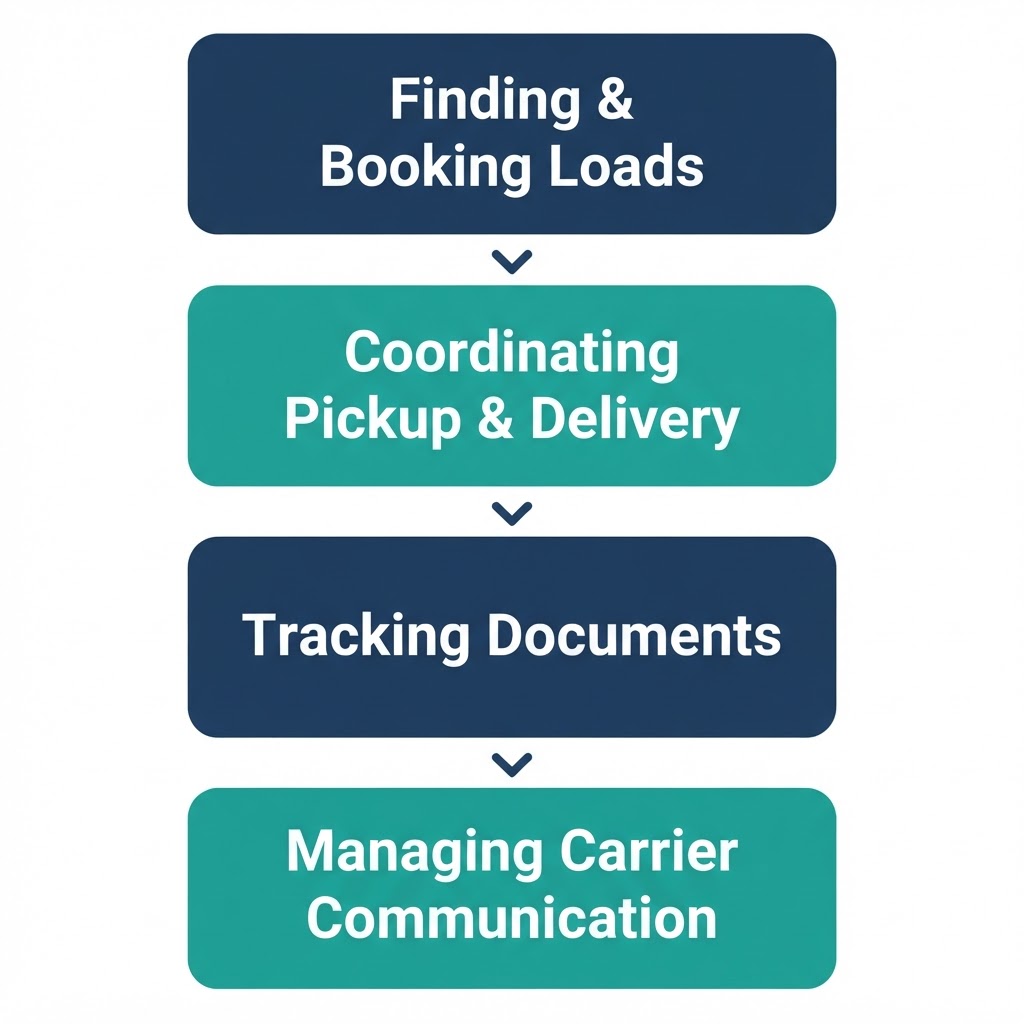
At its core, a cargo dispatcher coordinates the movement of goods from point A to point B on behalf of a carrier, a fleet, or — increasingly common — as an independent contractor working with multiple owner-operators. The daily work typically includes:
Finding and booking loads through load boards or broker relationships, matching available trucks or capacity with shipments that need to move. Coordinating pickup and delivery windows, confirming appointment times work for both the shipper and the driver. Tracking paperwork through each stage — rate confirmations, bills of lading, proof of delivery — so nothing falls through the cracks between booking and getting paid. And staying in communication with drivers or carriers throughout the trip, handling delays, detours, or problems as they come up.
None of this requires a physical office or direct employment by a trucking company. A growing share of cargo dispatchers work independently, managing a roster of owner-operators remotely rather than being tied to one carrier's fleet.
How "Cargo Dispatcher" Overlaps With "Freight Dispatcher"
In most real-world usage, these two terms describe the same work. Both involve coordinating shipments, working with carriers, and managing the handoffs between booking and delivery. Job postings and training programs often use them interchangeably, and the day-to-day tasks don't meaningfully differ.
Where it can diverge: "cargo" is a broader word than "freight," and in some contexts it extends to air cargo or ocean cargo coordination — work that involves customs documentation, different carrier types, and different regulatory requirements than domestic trucking. If a posting or course is specifically about air or ocean cargo, it's describing a different skill set than coordinating truckload freight with independent carriers.
For the vast majority of people searching this term, though, "cargo dispatcher" and "freight dispatcher" point to the same domestic trucking-focused role.
The Skills That Actually Matter
Dispatching rewards a specific mix of abilities more than any formal credential. Clear, fast communication matters most — carriers and brokers both expect quick responses, and a dispatcher who goes quiet for hours during an active load creates real problems. Organization is close behind: juggling multiple loads at different stages at once, each with its own paperwork and deadlines, is the daily reality of the job.
Comfort with basic negotiation helps too, since rate discussions with brokers are routine. And a working knowledge of the documents involved — rate confirmations, load tenders, proof of delivery — makes the difference between a dispatcher who catches problems early and one who finds out about them after a payment gets delayed.
A Real-World Example
Someone new to the field might picture dispatching as mostly phone calls and scheduling. In practice, a single morning could involve checking overnight messages from three different drivers, confirming a delivery appointment got pushed back two hours, chasing down a missing rate confirmation from a broker before a driver can legally haul the load, and fielding a call from a carrier asking about a commission payment that hasn't shown up yet.
The job is less about any single skill and more about managing several moving pieces at once without letting any of them slip.
Getting Started
For someone considering this work, the entry point is usually lower than people expect — no license or certification is legally required to work as a freight or cargo dispatcher in the US, though some training programs and courses exist to teach the fundamentals faster than learning entirely on the job. What matters more in practice is building relationships with carriers willing to work with a new dispatcher, and having a system — even a simple one — to track loads, documents, and payments from day one.